Product Overview
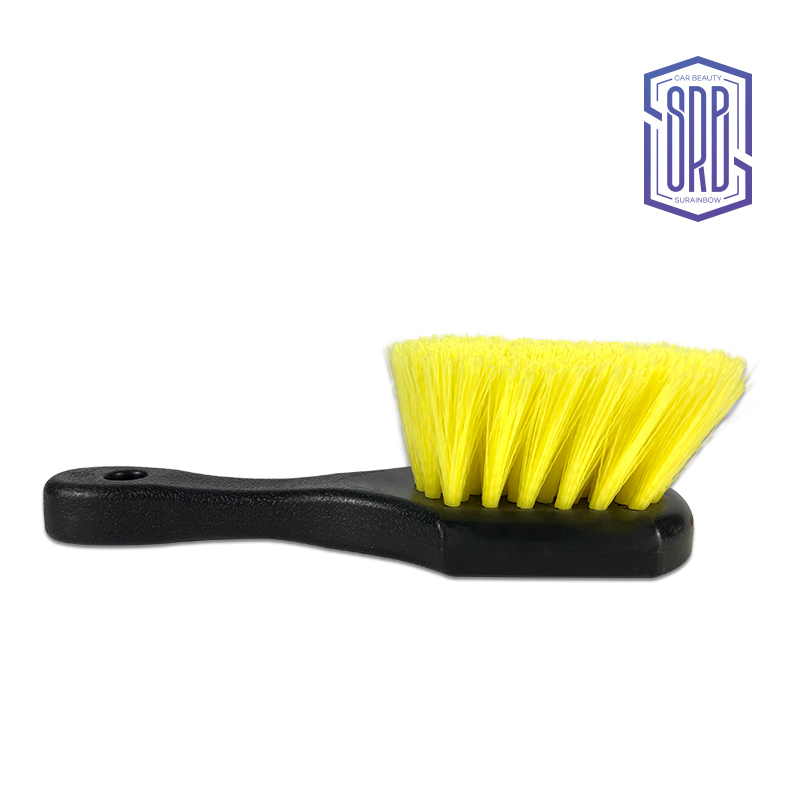
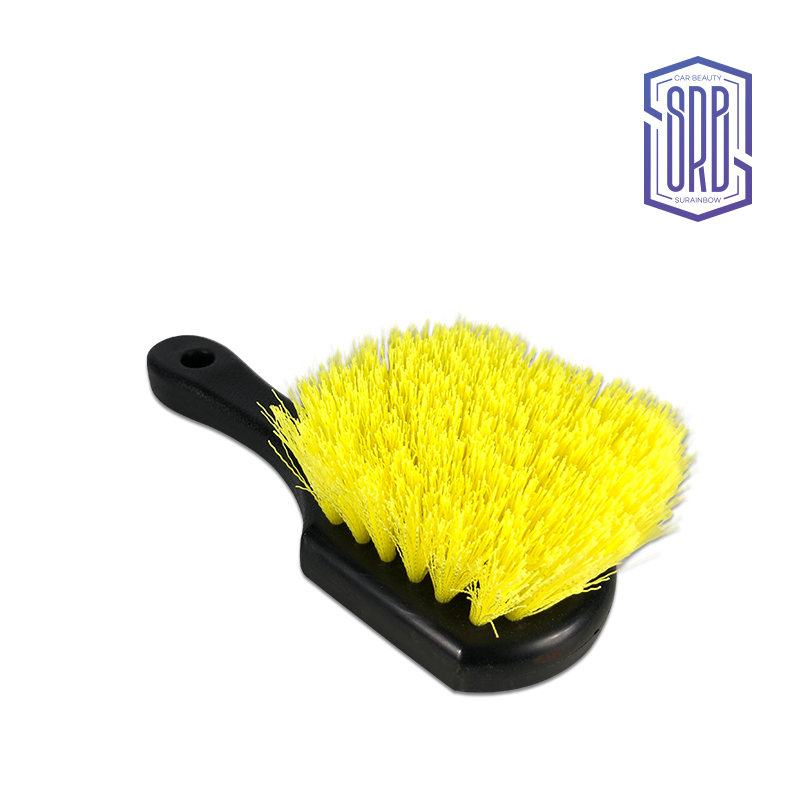
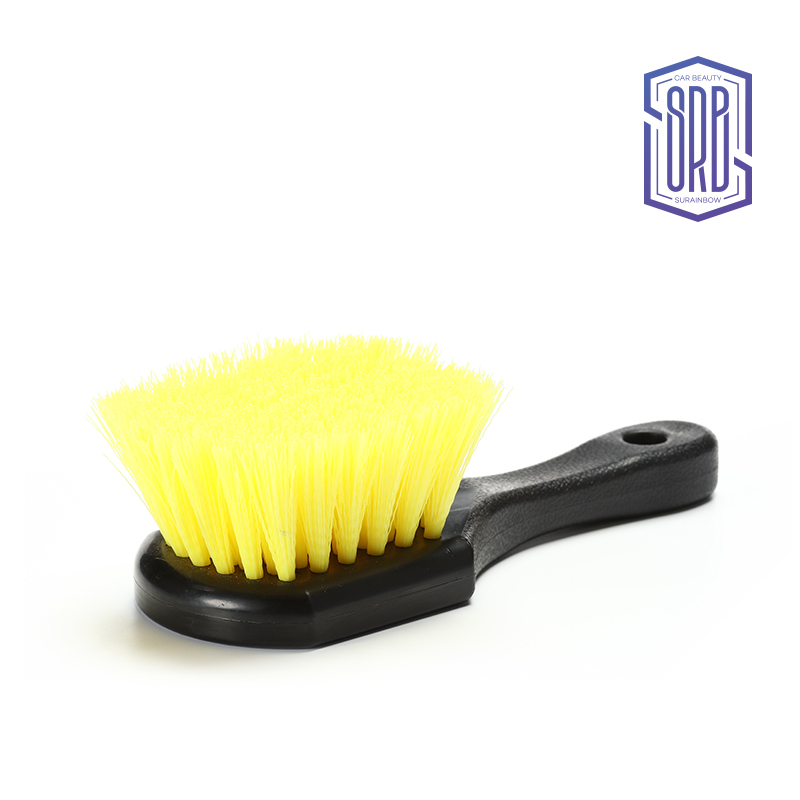
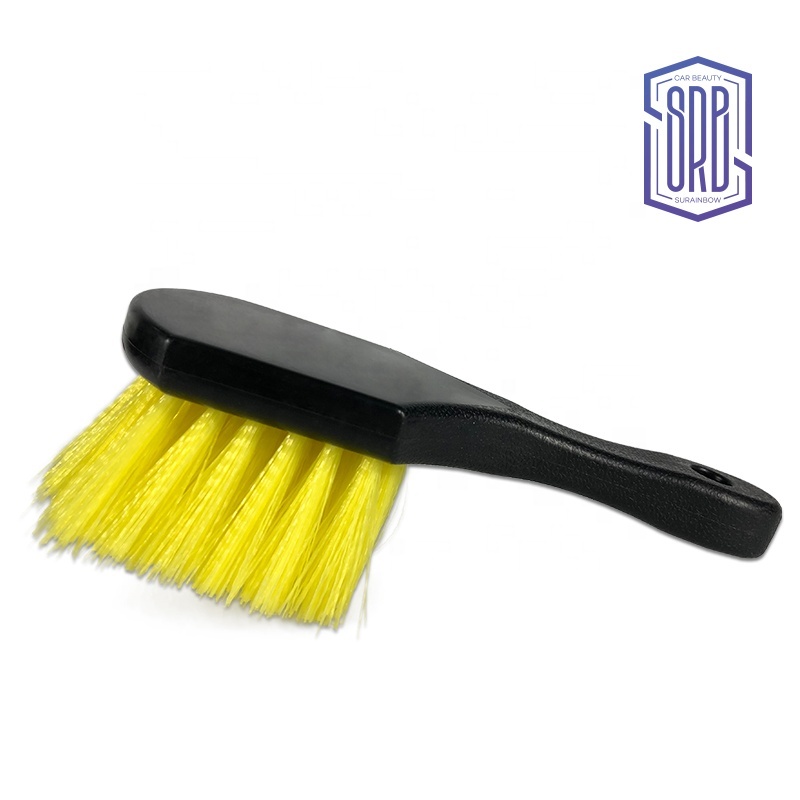
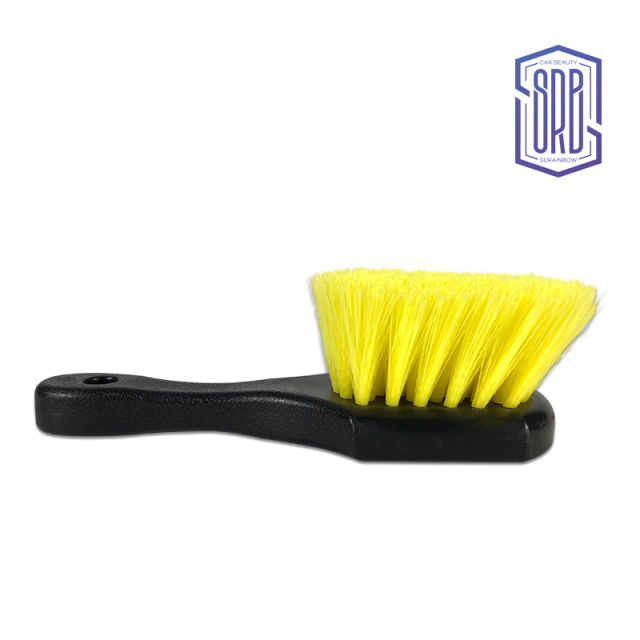
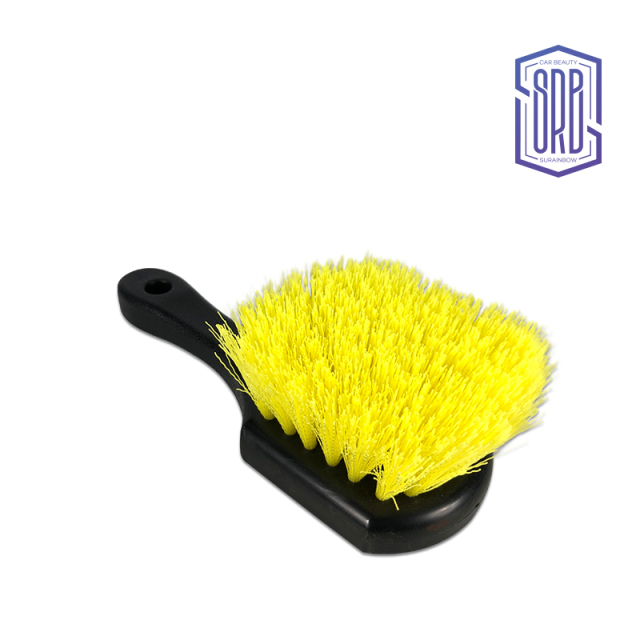
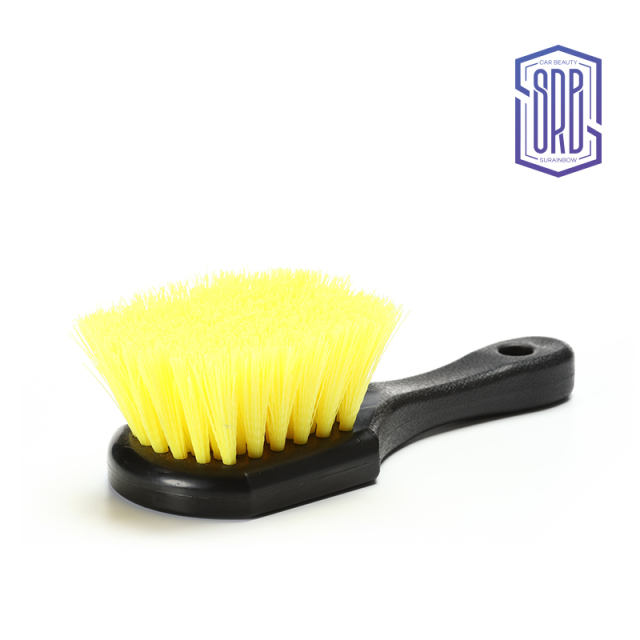
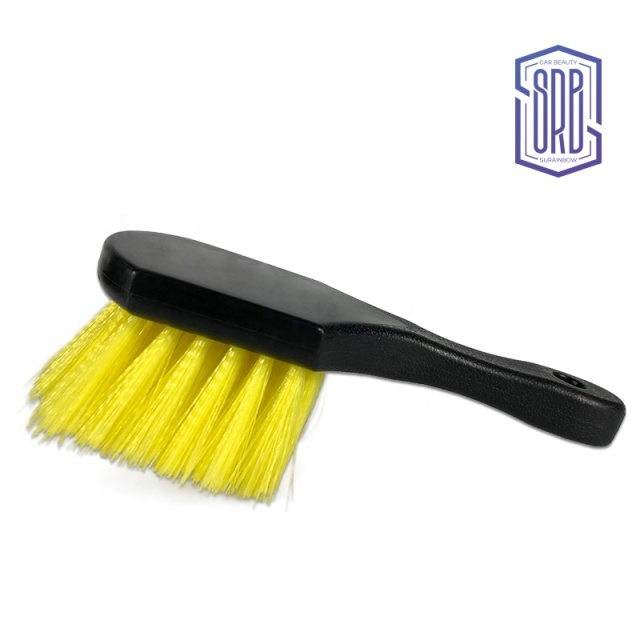
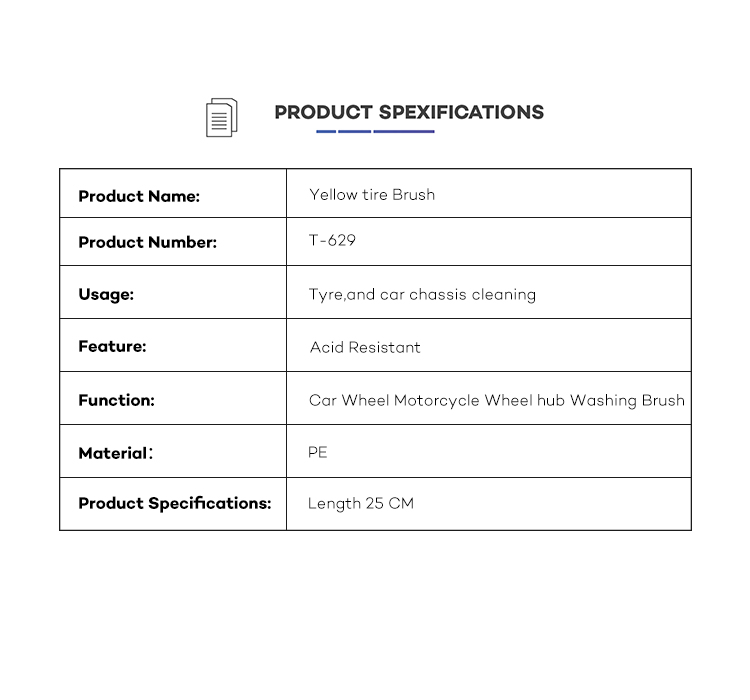
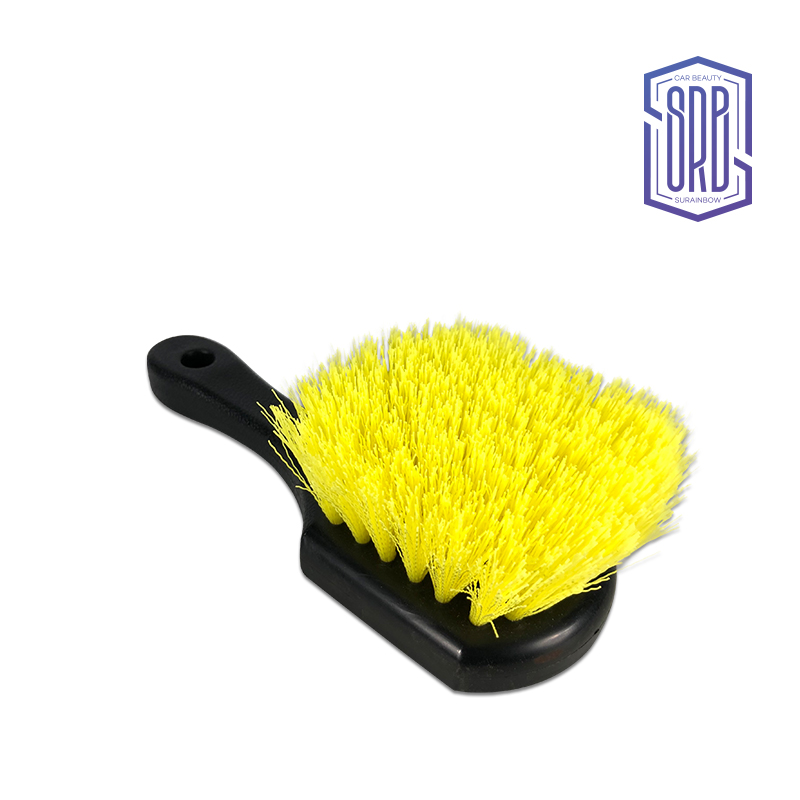
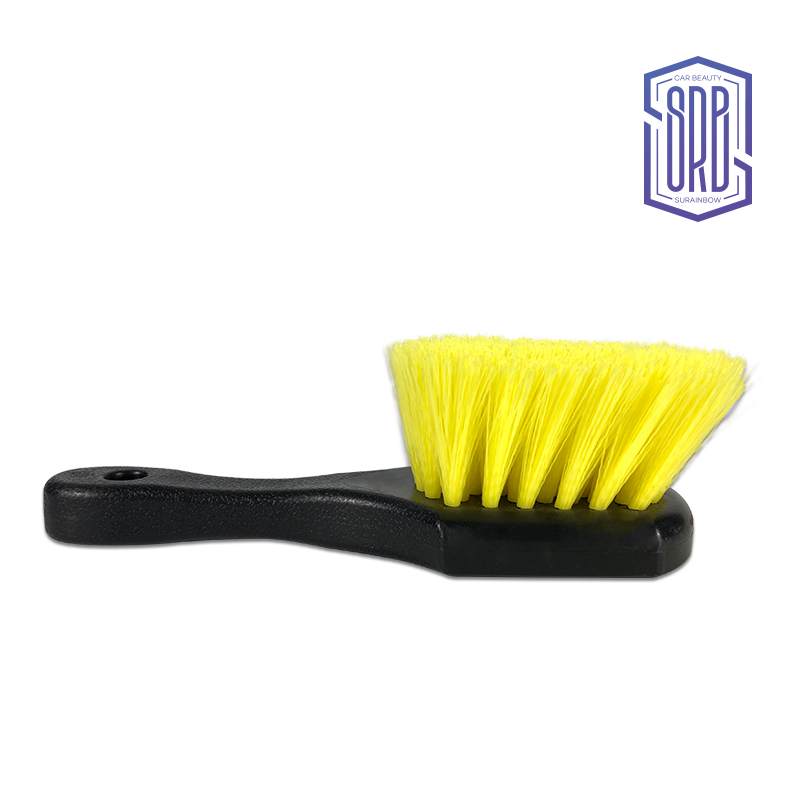
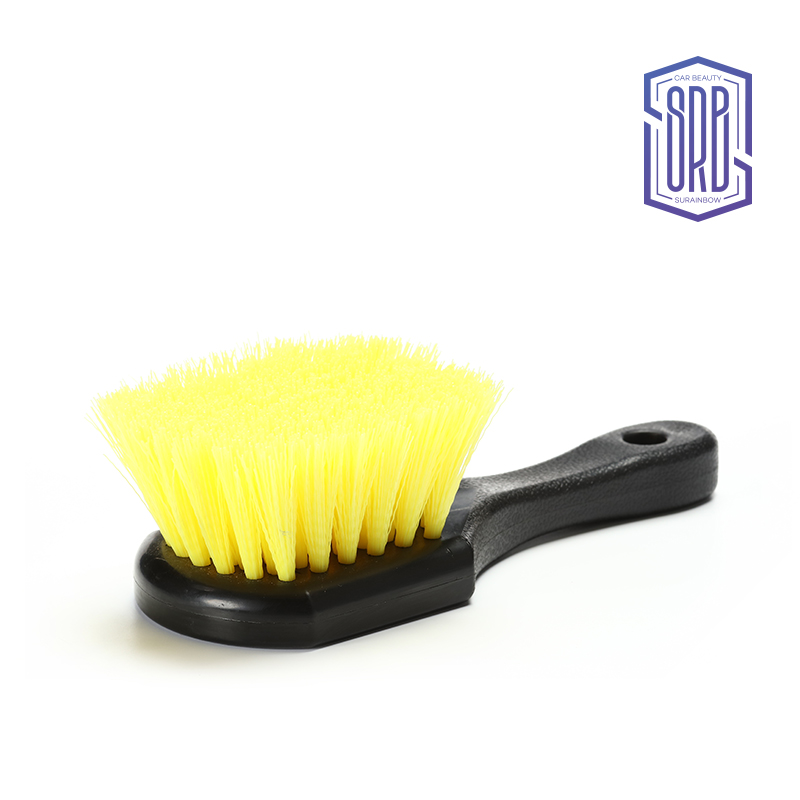
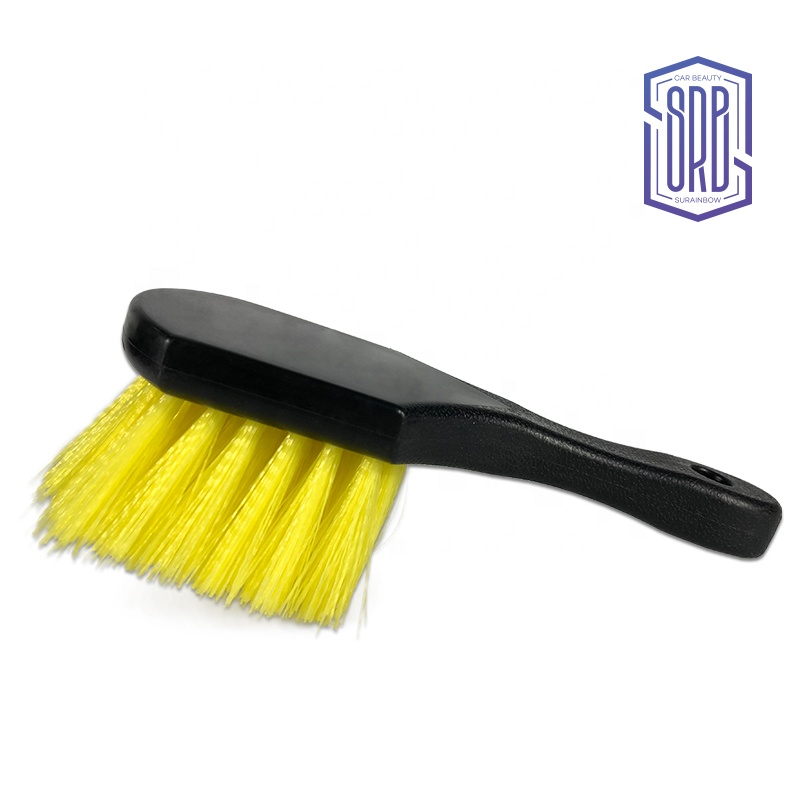
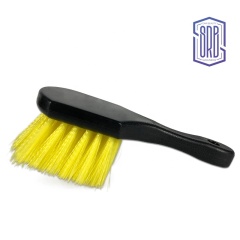
The yellow tire brush is a 25 cm handheld brush for tyre sidewalls, wheel arches and the underside of a car: a black moulded handle, a flat rectangular head and a dense face of yellow bristles. It is one of those car care supplies for car wash bays that gets picked up on every vehicle, because rubber and arches are where a wash either looks finished or does not. Tyre rubber is a different job from a painted rim. Sidewalls hold road film, brake dust and the residue of old dressings, and they take a much firmer scrub than a polished wheel face will tolerate. The dense upright bristles here work that surface without the flex of a soft detailing brush, so a pass lifts the grey film instead of smearing it around the tyre. The length is chosen for the working space: long enough to reach over the shoulder of a tyre and into the back of an arch, short enough to keep control when your other hand is holding a lance or a bucket. Yellow bristles also read clearly against black rubber, so you can see where the dirt is still sitting.
Build & Bristle Design
- Dense, upright bristles. Tufts stand straight out of the base in a tight pattern, giving a firm face that works evenly over lettering, shoulder ribs and the bead area.
- Acid and alkali resistance. The bristles cope with the alkaline wheel gels, the acidic fallout removers and the car wash shampoo used in a normal wash — the chemical contact that shortens the life of a low-cost brush first.
- Moulded bristle base. The tufts sit in a solid black base rather than a folded strip, so the head keeps its shape as it wears and sheds fewer bristles into the wash bucket.
- Hanging hole at the handle end. The brush hangs on a hook at the station between jobs, which keeps it off the floor and easy to find when the next vehicle rolls in.
Use & Care
Rinse the head under clean water after every job and work the bristles with your thumb until the water runs clear of car wash cleaner. Grit trapped in the tufts is what dulls the tips and drags scratches across the next sidewall, and like most cleaning tools for car wash use, this brush lasts longer when it is rinsed at the end of a shift rather than the end of a week.
Hang it from the hole at the end of the handle, head down, so water drains out of the base instead of sitting in it. A brush left standing in a bucket of car wash shampoo or lying on the floor holds its moisture, and a damp head is where bristles start to smell and splay.
This is a tyre and underbody brush, not a wheel-face brush. The dense, stiff bristles are there to bite into rubber; on a polished alloy face, gloss paint or a wrapped panel they can leave marks that a soft detailing brush would never make, so keep a separate soft brush for the rim face and the bodywork.
There is no need to soak it in solvent after it has met a strong car detailing cleaner or a wheel acid. A thorough rinse and a proper dry do more for the bristles than any soak, and they keep the base from holding chemical between jobs.
Retire the brush when the bristles splay outward or the base starts to crack. A splayed head skips over the sidewall instead of scrubbing it, which is the point where a wash starts taking longer than it should.
Where It's Used
- Wash bays and valeting stations. One brush per bay handles sidewalls, arches and sills on every vehicle, and it works with the car wash cleaner already in the drum.
- Passenger cars and SUVs. Tall sidewalls and deep arches are the everyday case, and the 25 cm handle reaches the top of the tyre without a step stool.
- Motorcycles and scooters. Narrow tyres, exposed frames and spoked wheels are easier to work with a handheld brush than with a mitt, and the flat head fits between the fork legs.
- Vans and light-commercial fleets. High-sided tyres and long arches on delivery vehicles collect a lot of road film that a car detailing cleaner alone will not shift, and a firm brush moves a fleet through a wash line faster than a soft one.
- Dealership pre-delivery prep. New tyres arrive with release agent and transport film that has to come off before the vehicle is presented, and the brush takes it off without touching the wheel finish.
- Detailing studios stripping old dressing. A sidewall that has carried tire shine for months needs a proper scrub before the next coat goes on, otherwise the new layer simply sits on top of the old one.
- Range builders and private-label buyers. We work as one of the car care products manufacturers that supplies both the brush and the chemistry behind it, so a wheel-care kit can be built, branded and reordered from one place.
- Wash-bay consumables. Brushes wear out on a schedule of their own, which makes a simple, low-cost brush a reliable line to keep among the car care supplies you reorder.
Tyre Wash Sequence
- Pre-rinse the tyre and arch before anything touches the rubber. Loose grit, brake dust and salt come off with water pressure, and scrubbing them dry is what grinds dirt into the sidewall.
- Load the brush with your car wash shampoo or a dedicated wheel-and-tyre gel, starting at the top of the tyre and working down so the run-off carries the foam into the lower sidewall.
- Scrub in short, overlapping strokes across the sidewall and over the shoulder, then around the lettering and along the bead where film collects in the tightest line.
- Take the same brush into the arch. Run it along the liner, over the sill and around the mud flaps — the motion that cleans the tyre also clears the parts a customer never looks at but always notices.
- Rinse before the car wash cleaner dries. A wheel product left to dry on rubber leaves a chalky patch that takes a second wash to shift and makes the finished tyre look uneven.
- Dry the sidewall and then dress it: tire shine goes on with a separate sponge or applicator, never with the tyre brush, so the dressing stays on the rubber and out of the bristles.
Specifications
| Product name | Yellow tire brush |
| Model | T-629 |
| Type | Handheld cleaning brush |
| Material | PVC and ABS |
| Overall length | 25 cm |
| Bristle colour | Yellow |
| Handle colour | Black |
| Bristle face | Flat rectangular, dense upright tufts |
| Chemical resistance | Acid and alkali resistant |
| Main use | Tyre sidewall cleaning |
| Also used on | Wheel arches, chassis, sills and mud flaps |
| Brand | SURAINBOW |
| Place of origin | Guangdong, China |
Sampling, Packaging & Batch Records
- Send the brief: which item you want, the market it is going to, the quantity you have in mind, and whether the brush ships on its own or alongside other car care products in the same order.
- Ask your sales contact about sample availability and scope before committing, then put the sample through your own wash process. Bristle firmness, handle length and how the head behaves on a wet sidewall still carrying old tire shine are the things a photograph cannot tell you.
- Agree the packaging. Label artwork, barcode data, carton marks and the pack count per carton are proofed and confirmed before production, so the cartons that arrive match what your market expects.
- Seal the approved sample. The brush you signed off becomes the reference the bulk order is checked against, so keep it identified and stored where it can be found again.
- Keep the batch record. Production batches carry a reference and a retained sample, which is what makes a repeat order comparable with the first one rather than a fresh guess.
- Raise anything that is off after delivery with the batch reference, the affected quantity and photos, so it can be checked against the approved sample instead of argued from memory.
Ordering & Delivery
| Minimum order quantity | 100 pcs |
| Availability | In stock and fast shipping |
| Payment | Balance settled before shipment; confirm the accepted method and currency with your sales contact |
| Packing | Pack count and carton marks confirmed for your quantity at quotation |
| Export documents | Commercial invoice, packing list and destination documents confirmed at order stage |
| Lead time | Confirmed against your quantity and shipping method at quotation |
| Mixed orders | Can be combined with other brushes, cloths and chemicals from the range |
| Customisation | OEM and private-label requests reviewed item by item |
| Range fit | Supplied as part of our car care supplies for wash bays and detailing teams |
Scale & Supply Capability
SURAINBOW is run by Guangzhou Liangdian Automotive Supplies Co., Ltd., a factory-trade operation set up in Guangzhou in 2010 and now 50 people strong. Sixteen years in car care have given us a one-stop supply position: our own SURAINBOW lines are held in stock for fast shipping, and an associate factory with modern production equipment and an established quality management system keeps replenishment moving. We take OEM and ODM work and our R&D team develops to your specification. Buyers in the Middle East, the United States, Southeast Asia, Europe, the UK, Russia, Africa and Australia already order from us.
FAQ
How is this tyre brush different from a wheel hub brush?
A wheel hub brush is shaped to work the rim face and the spokes; this one is built for rubber and underbody work. The flat head and dense bristles are there to scrub a sidewall, shoulder and arch liner, where a softer wheel brush would wear out quickly. Both belong in a wash bay as separate cleaning tools for car work, and keeping them apart also stops grit from the tyre ending up on a polished rim.
Will the bristles survive strong wheel cleaners?
The brush is made acid and alkali resistant, so it is built to cope with the alkaline gels and acidic fallout removers that a strong car detailing cleaner brings with it. Rinse the head after use and it keeps its firmness; leaving it coated in chemical is what shortens any brush's working life.
Can I use it on alloy wheels or painted panels?
Keep it on tyres, arches, sills, liners and mud flaps. The bristles are dense and firm enough to bite into rubber, and that same firmness can dull a polished alloy face or mark gloss paint. Use a soft wheel-face brush or a wash mitt for the rim face and the bodywork.
How long is the brush, and will it reach behind the arch?
The brush measures 25 cm overall, handle included. That is long enough to reach over the top of a tyre and into the back of an arch on most passenger cars and vans while your hand stays clear of the liner. On a lifted vehicle with very deep arches, expect to work the area in two passes.
Can the brush be supplied under our own brand?
Logo and label artwork for the brush can be discussed with your sales contact, and the tool can be supplied under a buyer's own brand instead of SURAINBOW. Private-label scope depends on your market and quantity, so confirm it when you request the quote. We are one of the car cleaning products manufacturers that also makes the chemistry side, so the brush and the rest of the car care products it works with can carry the same name on the shelf.